Stablecoin regulation is a top priority for lawmakers, and three recent proposals reflect differing perspectives on how to achieve regulatory clarity while balancing safety and innovation.

By Jenny Cieplak, Arthur LongYvette D. ValdezStephen P. Wink, Pia Naib, Connor Jobes, and Deric Behar

In the wake of President Trump’s executive order on digital assets aiming to make the US the “crypto capital of the planet” (for more information, see this Latham blog post

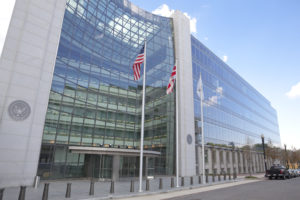
The new unit aims to protect retail investors and foster innovation by addressing cyber-related misconduct and emerging technology fraud.

By Margaret GrahamMichael H. RubinNathan H. Seltzer, and Douglas K. Yatter

On February 20, 2025, the Securities and Exchange Commission (SEC) announced the establishment of the Cyber and Emerging Technologies Unit (CETU), which will focus on combatting cyber-related misconduct and protecting retail investors from fraud in the emerging technologies sector. The new unit, led by Laura

The SEC’s move is part of a recent shift toward a less enforcement-centric approach that is set to reshape the regulatory framework for digital assets in the US.

By Stephen P. Wink, Naim Culhaci, and Deric Behar

On February 20, 2025, the US Securities and Exchange Commission (SEC) voluntarily dismissed its appeal against a pair of related decisions by the US District Court for the Northern District of Texas to vacate the SEC’s Rules 3a5-4 and 3a44-2 (together

In an opinion post for a16z crypto, Latham lawyer Jenny Cieplak calls for a new regulatory approach for tokenized securities.

By Jenny Cieplak

A significant number of projects over the past several years have “tokenized” so-called real world assets, turning more than $20 billion in everything from debt to diamonds and more into tokens. Tokenization may sound like some kind of mysterious alchemy, but the concept is simple: It means creating a digital representation of some physical thing — a

Commissioner Hester Peirce outlined 10 priorities for the Crypto Task Force, aiming for regulatory clarity while promoting innovation in digital asset markets.

By Jenny Cieplak, Zachary Fallon, Yvette D. Valdez, Stephen P. Wink, and Deric Behar

On February 4, 2025, Commissioner Hester Peirce, leader of the Securities and Exchange Commission’s (SEC’s) newly established Crypto Task Force (the Task Force), published a statement outlining the Task Force’s main areas of focus. She noted that the list is

The NYAG’s action highlights various pitfalls in the MCA space, underscoring the importance of proper structuring and marketing of merchant cash advances.

By Parag Patel, Mik Bushinski, Connor Jobes, and Deric Behar

On January 22, 2025, New York Attorney General (NYAG) Letitia James announced a judgment and settlement against cash advance provider Yellowstone Capital, its officers, and two dozen affiliates (Yellowstone) for more than $1 billion for predatory loans disguised as merchant cash advances (MCAs) made to

With its pro-crypto stance and urgent posture, the executive order promises to make the US the “crypto capital of the planet.”

By Jenny Cieplak, Zachary Fallon, Arthur LongYvette D. ValdezStephen P. WinkDouglas K. Yatter, and Deric Behar

On January 23, 2025, President Trump issued a highly anticipated executive order on digital assets titled “Strengthening American Leadership in Digital Financial Technology” (the Order). The Order asserts at the outset that the digital asset industry is critical for US innovation, economic development, and international leadership. It further undertakes “to support the responsible growth and use of digital assets, blockchain technology, and related technologies across all sectors of the economy. …”

Highlights of the Order are outlined below.

The CFPB’s proposal, its first attempt to regulate cryptocurrencies and stablecoins, is unlikely to survive the administration change.

By Parag Patel, Adam Bruce Fovent, and Deric Behar

On January 10, 2025, the Consumer Financial Protection Bureau (CFPB) issued a proposed interpretative rule that would extend the consumer protections of the Electronic Funds Transfer Act (EFTA) to certain stablecoin and other virtual currency accounts, video game accounts, and credit card rewards points accounts (the Proposed Interpretation).1 In issuing

A Republican Congress and the incoming Trump administration may employ the CRA to quickly overturn recent rules that faced heavy criticism from the financial services industry.

By Jenny Cieplak, Zachary Fallon, Arthur Long, Parag Patel, Barrie VanBrackle, Stephen Wink, Connor Jobes, and Deric Behar

Every four years in American politics is an opportunity to turn the tables on the party in power. But leading up to and following an election that shifts control

Under recent accounting rule changes, unrealized crypto gains must generally be reported on income statements, but questions arise about the alignment of the new Corporate Alternative Minimum Tax with constitutional tax principles.

By Andrew Strelka and Angelina Richards

Recent developments in taxation have brought cryptocurrency into the spotlight. The US Supreme Court’s 2024 ruling in Moore v. United States upheld a tax on undistributed foreign earnings, setting a precedent that could affect how unrealized gains are taxed under the new